Theme:“Empowering Internal Auditors:
Driving Sustainable Governance and Institutional Resilience”
May 15-16, 2025 | Virtual via Zoom
The 5th Government Internal Audit (GIA) Summit was successfully conducted on May 15-16, 2025, via Zoom, with a total of 350 participants composed of 114 from National Government Agencies (NGAs), 98 from Local Government Units (LGUs), 67 from Government-Owned and Controlled Corporations (GOCCs), and 71 from State Universities and Colleges (SUCs). The summit served as a dynamic platform for knowledge-sharing, professional development, and collaboration, emphasizing the evolving role of internal auditors in promoting transparency, accountability, and institutional resilience.
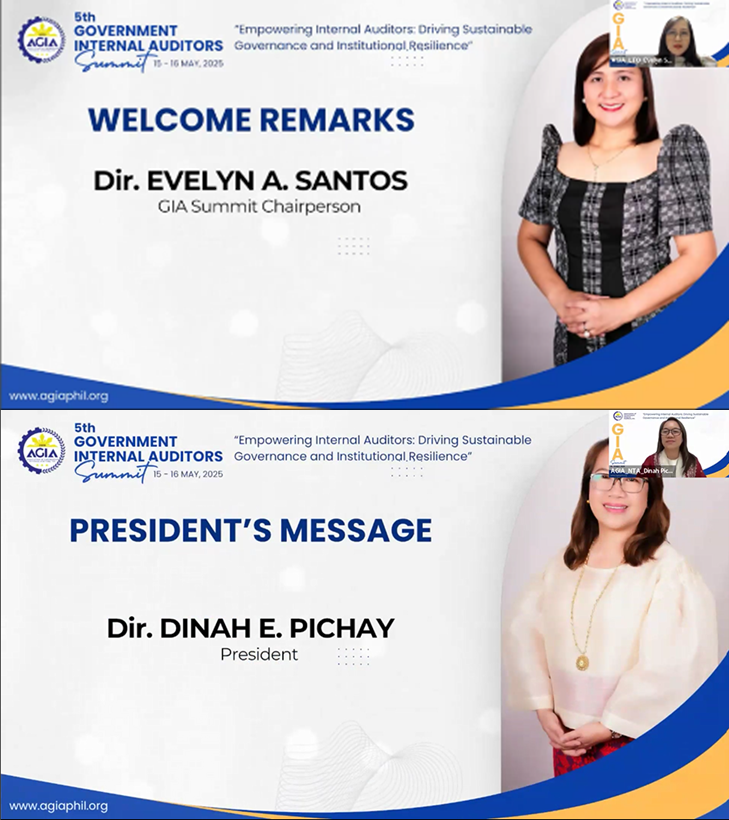
The program opened with Welcome Remarks from Ms. Evelyn A. Santos, CICA, GIA Summit Chairperson, who underscored the vital role of internal auditors in fostering ethical governance and continuous learning to meet the demands of evolving public sector challenges. Ms. Dinah E. Pichay, CICA, CESE, MM, President, introduced the Keynote Speaker, highlighting the importance of equipping internal auditors with strategic foresight and innovative approaches.
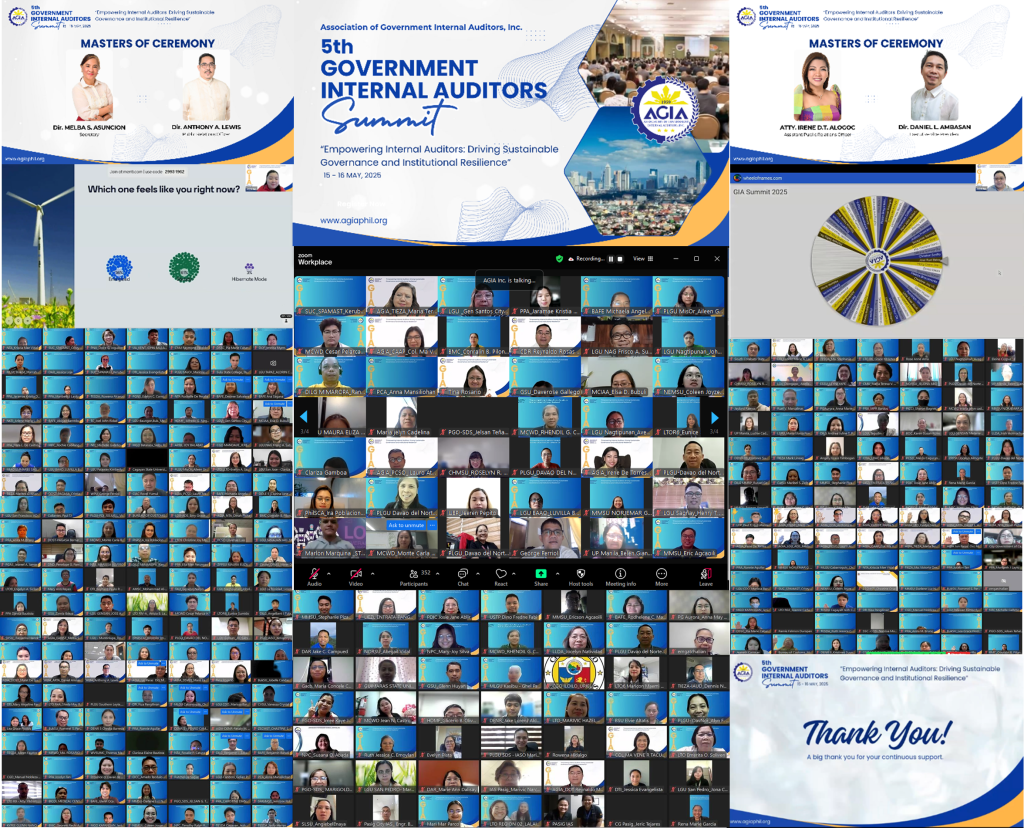
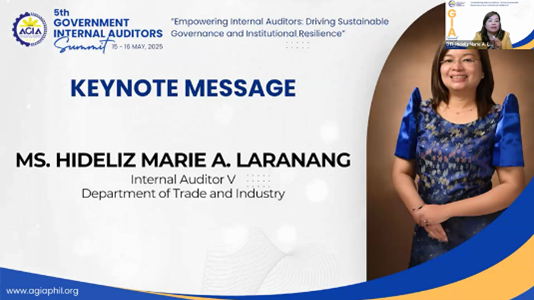
Delivering the Keynote Message, Ms. Hideliz Marie A. Laranang, Internal Auditor V, Department of Trade and Industry, who set the tone for the summit, emphasized the critical contribution of internal auditors in strengthening institutional accountability through robust audit frameworks, risk management strategies, and a proactive governance mindset. She called on auditors to embrace their transformative role as enablers of ethical leadership and sustainable development.
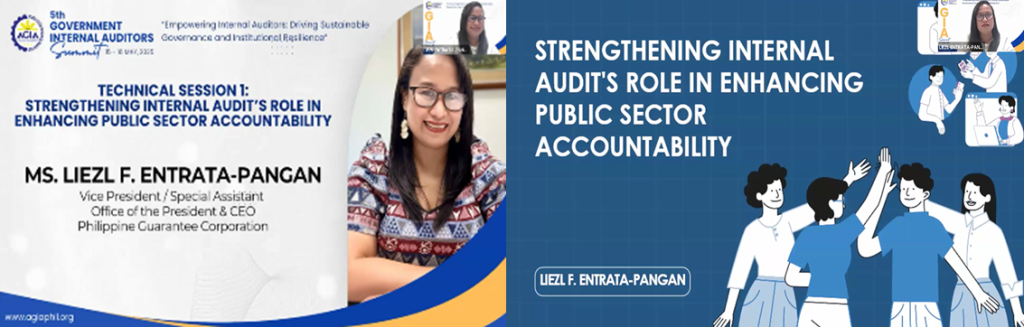
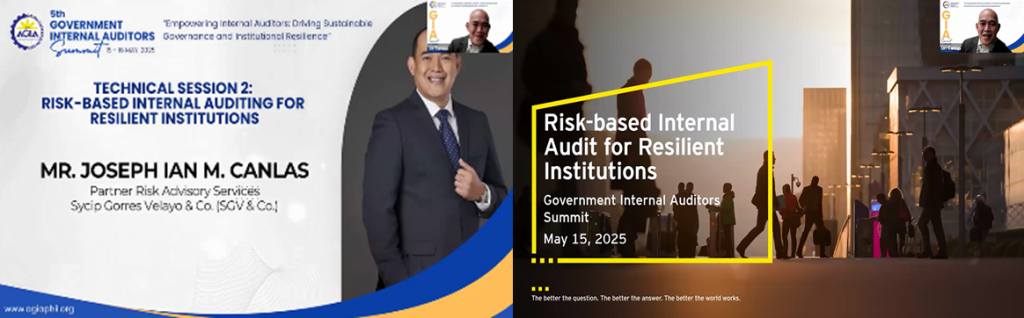
The summit featured a series of technical sessions addressing pivotal topics. Technical Session 1, led by Ms. Liezl F. Entrata-Pangan of the Philippine Guarantee Corporation, focused on strengthening internal audit’s role in enhancing public sector accountability through frameworks that promote transparency and ethical governance. Technical Session 2 was delivered by Mr. Joseph Ian M. Canlas, Partner, Risk Advisory Services, SGV & Co., who highlighted risk-based auditing approaches to fortify institutional resilience and adaptability during crises.
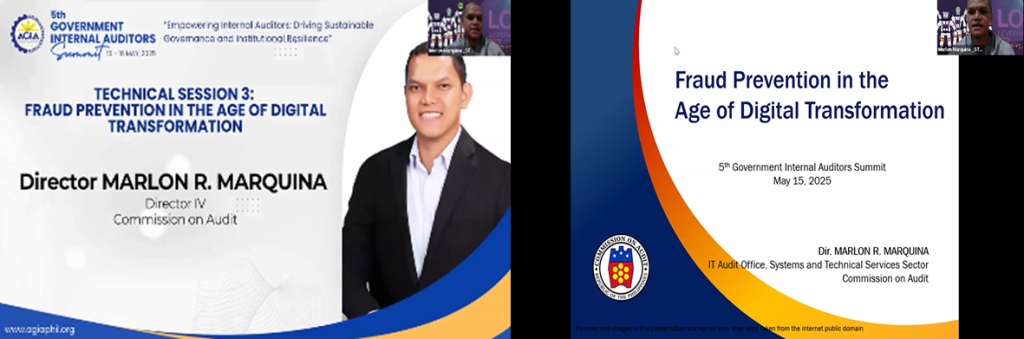
Technical Session 3 was presented by Dir. Marlon R. Marquina, Director IV of the Commission on Audit, who discussed Fraud Prevention in the Age of Digital Transformation, emphasizing strategies to detect and prevent fraud amid evolving digital systems and technologies.
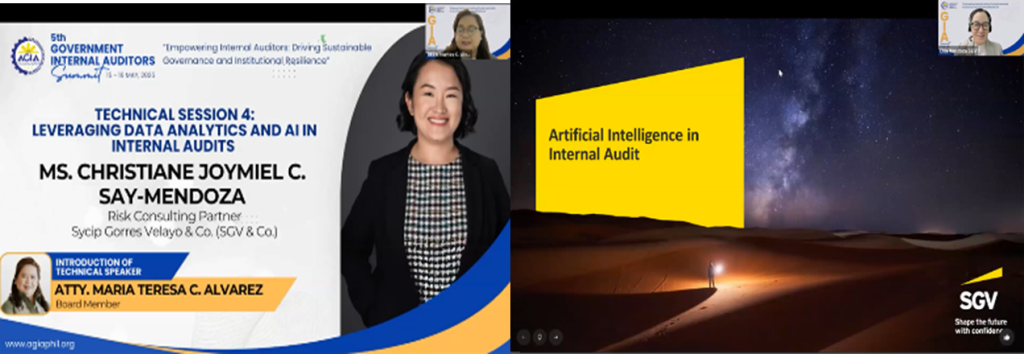
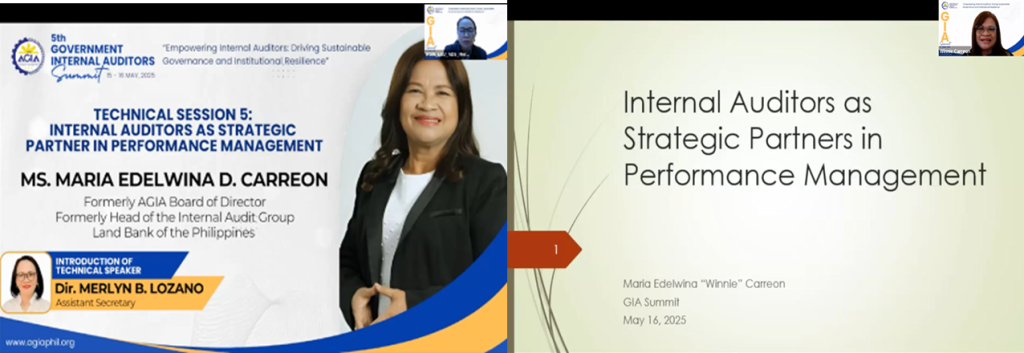
On Day 2, Ms. Christiane Joymiel C. Say-Mendoza, Risk Consulting Partner, SGV & Co., presented Technical Session 4 on leveraging data analytics and artificial intelligence in internal audits, demonstrating how technology can enhance audit efficiency and provide deeper insights. Technical Session 5, delivered by Ms. Maria Edelwina D. Carreon, Former AGIA Board of Director, emphasized the strategic partnership of internal auditors in institutional performance management and continuous improvement.
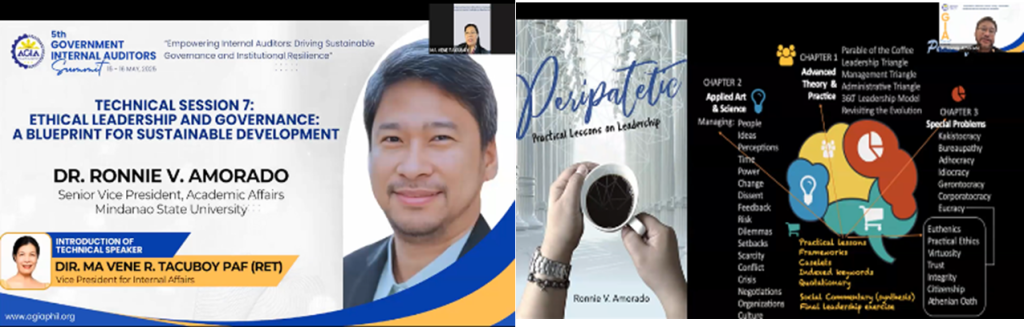
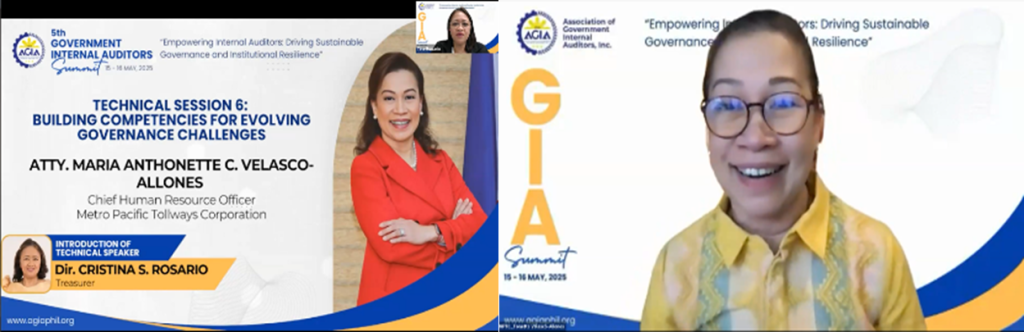
In the afternoon, Atty. Maria Anthonette C. Velasco-Allones, Chief Human Resource Officer of MPTC, led Technical Session 6 on building competencies to address evolving governance challenges, focusing on capacity-building for sustainability and resilience. The final session, Technical Session 7, was delivered by Dr. Ronnie V. Amorado, Senior Vice President for Academic Affairs, MSU, discussing the vital role of ethical leadership in governance and its significance as a blueprint for sustainable development.
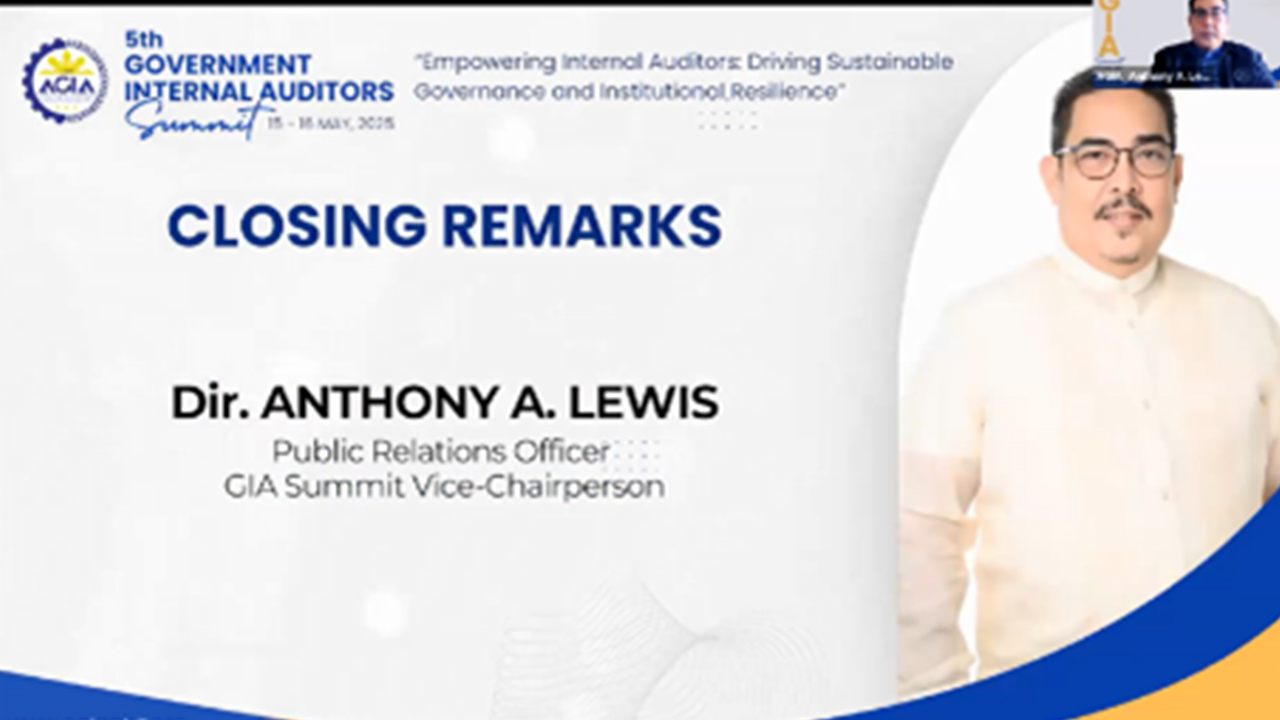
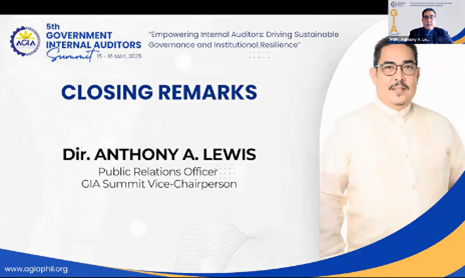
The summit concluded with Closing Remarks from Mr. Anthony A. Lewis, CICA, CESE, MBA, GIA Summit Vice-Chairperson and Public Relations Officer, who emphasized the key takeaways of the two-day event and reaffirmed the commitment of the internal audit community to drive good governance, transparency, and institutional excellence.
The 5th GIA Summit successfully reinforced the strategic role of internal auditors as key enablers of sustainable governance and institutional resilience. The event fostered a collaborative environment for sharing best practices, enhancing audit competencies, and strengthening the capacity of internal auditors to proactively address the complexities of public sector governance.